
wasian and exhausted.
Existing as the Other in a world that was never built to accommodate us.

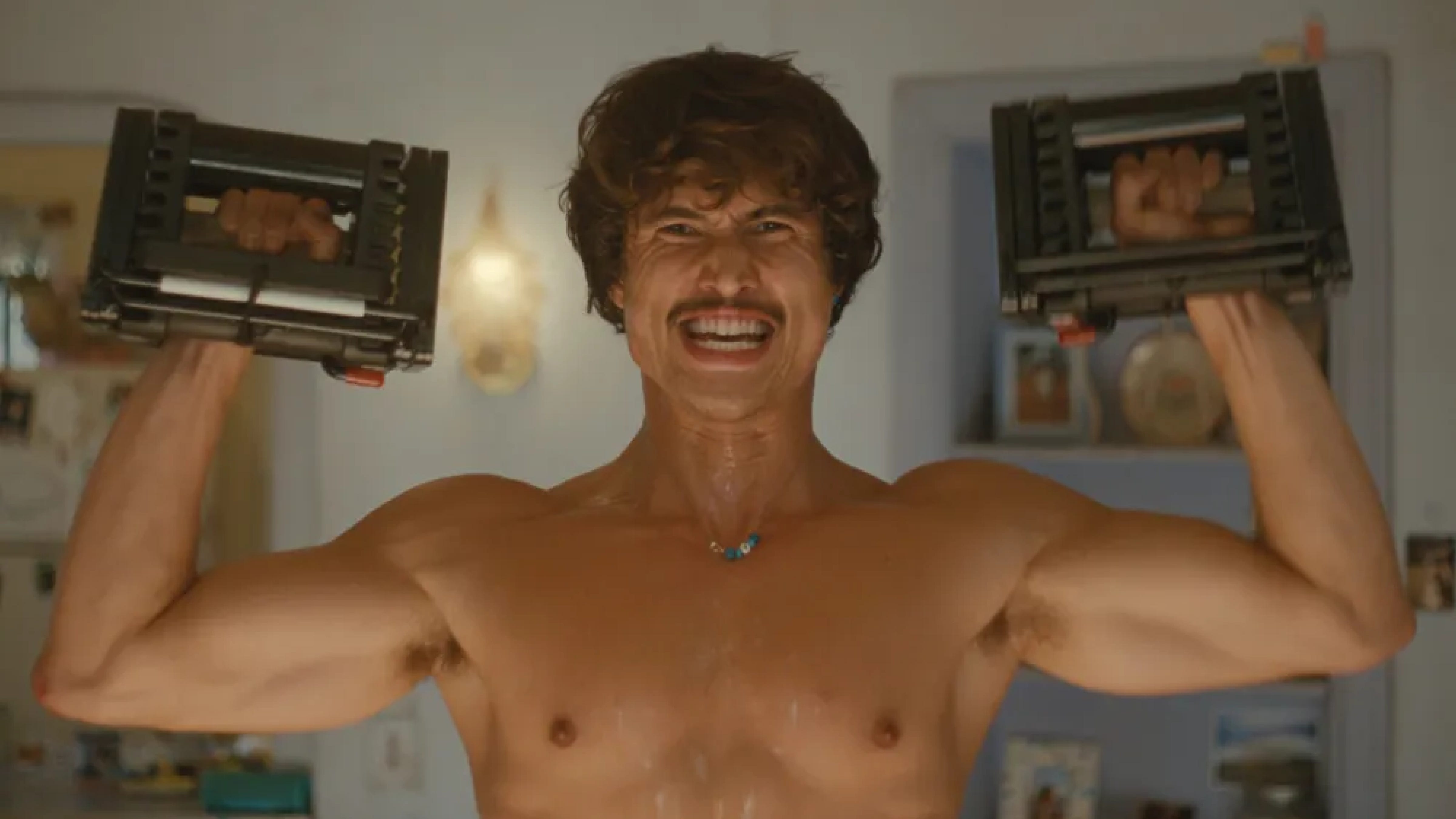
Two years ago, I was at Taipei Pride covering a story on queer families, who to this day, along with unmarried women, are still not permitted to access IVF procedures in Taiwan. Instead, they must go overseas if they want to have children — an arrangement that feels starkly at odds with a society that otherwise prides itself on being progressive while facing some of the lowest birth rates in the world.
I arrived at the NGO’s stall, where the organisers introduced me to the 20-30 families in attendance. All of their children, with one exception, were half white. One of the parents casually said to me:
“You’ve probably never been surrounded by so many 混血 (mixed-blooded people) in your life right? I bet you don’t feel so special anymore!”
Special. I decided to ask her why everyone had chosen to have mixed-race, specifically half-white children, to which she casually replied: “because you’re all so much more beautiful than us Asians!”
I remember feeling neither happy, sad nor angry, but something harder to name — an uncomfortable physical sensation in my throat and stomach — like an awareness of my own body as something being evaluated and assigned meaning. It was the same feeling I had felt years earlier, when a Taiwanese woman in a nightclub bathroom told me that people like me were the reason she wanted to marry a white man, so she could have “beautiful mixed babies.”
I think of designer babies. I think of eugenics. I think of my physical presence, the space I take up and whether those around me perceive my existence as nothing more than a “beautifully manufactured creation.”
How do you even respond to comments like these?
The feeling returns when I read the recent influx of essays and comments sections definining the entirety of the “wasian existence” as “an empty phenotype”, the face of eugenics or living proof of colonialism. I find myself wondering how many people view my existence not as a person, but as an aesthetic outcome driven by the likes of colonial-era eugenics; nothing more than an empty phenotype. I don’t want to be an empty phenotype.
But what pains me is that they aren’t entirely wrong. Though uncomfortable, these thoughts haven’t come from nowhere. I’ve literally witnessed evidence of this, even as late as 2026. I’ve heard people openly describe choosing partners, sperm or eggs with race and specifically whiteness in mind. It exists beyond the confines of internet discourse. And here I am again, left with this feeling, this hyper-awareness of the superficial elements that apparently define my existence.
This framing becomes even more complicated when figures like Olympic figureskater Alysa Liu enter the conversation. Liu and her four siblings were born through surrogacy using genetically and racially-selected egg donors. Online speculation now attempts to reduce her success or identity to assumptions about designer babies. Similar rumors have even circulated around Winter Olympian Eileen Gu in certain eugenics-coded, looksmaxxing corners of the internet, where her achievements are similarly being reframed through genetically-manufactured suspicion.
Whether or not such claims are true in any individual case, the pattern of interpretation is familiar: mixed-race people are repeatetly turned into sites of projection, debate and explanation. But then what? If someone is reduced to a narrative about origin or construction, does that diminish their right to exist as an individual, or the meaning of their talent and achievements? It should not.
An Instagram post by oneandahalfgayasians makes this point perfectly:
“We absolutely have to interrogate how Eurocentric systems shape representation, beauty standards, media visibility, fetishization, colorism, and unequal distributions of privilege within and beyond mixed communities. Avoiding those conversations only reinforces the structures being critiqued. But critique becomes limited when it stops at identifying systems and begins collapsing actual people into simplified manifestations of those systems. Too often, mixed people become discussed as symbols of racial discourse rather than as people navigating the contradictions produced by race itself.”
Mixed-race people were never supposed to exist in this world. We were never imagined within the boundaries of racial systems that developed under Eurocentric colonial modernity; systems that attempted to sort humanity into rigid, hierarchical and separate categories. These categories were historically enforced through pseudoscientific ideology, law, policy and cultural discourse. In this framework, interracial reproduction was often treated as a threat because it complicated the maintenance of clear racial lines, particularly those that positioned whiteness at the top of the global hierarchy.
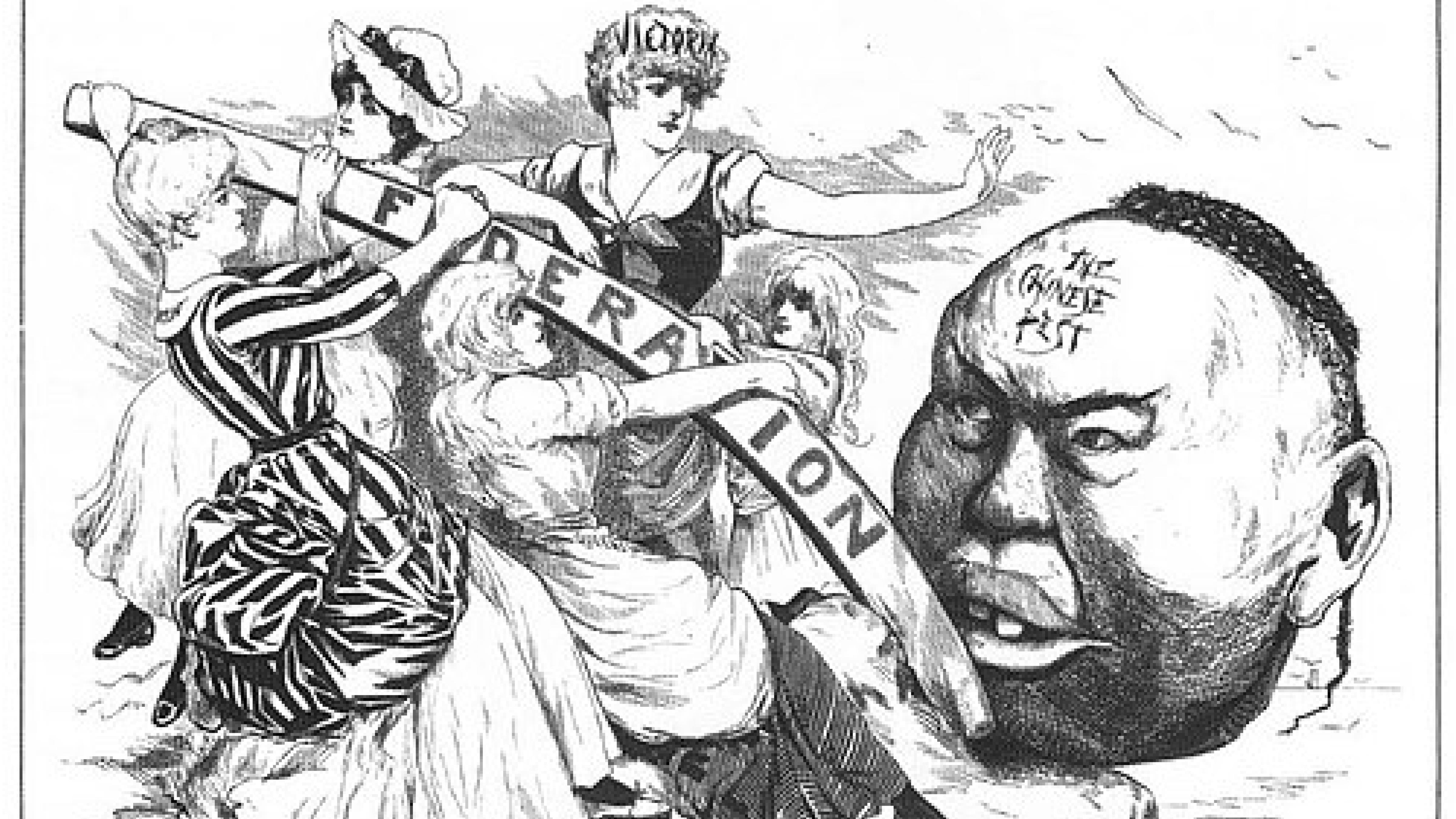
Across different contexts, this anxiety took several distinct forms. In the late 19th and early 20th centuries, anti-Chinese “Yellow Peril” propaganda in the United States, Britain and parts of the British Empire increasingly focused on the fears of race-mixing. Chinese men were portrayed as sexual and reproductive threats to white society, particularly in relation to white women. Influenced by pseudoscientific racism and emerging eugenic ideology, politicians, newspapers and colonial administrators framed interracial relationships and mixed race children as evidence of racial decline and a challenge to white dominance.
Similar dynamics shaped Black-white relations in the United States. Under the Jim Crow era, anti-miscegenation laws criminalised interracial relationships in many states, reinforcing the idea that racial separation was necessary to preserve white supremacy.
Black men were frequently depicted in racist propaganda as sexual threats to white women — a narrative that was used to justify segretation, racial terrorism and widespread lynching. Here again, control over intimacy and reproduction functioned as a central mechanism through which racial hierarchy was maintained, because the very existence of mixed-race children threatened the carefully-constructed ideology that racial boundaries were an essential part of natural order as a civilisation.
In colonial settings such as Hong Kong, British officials were also invested in maintaining racial hierarchy and imperial “prestige”, which led to immigration controls, social segregation and restrictions aimed at regulating interracial intimacy. This reflects a broader historical reality that colonial governments often viewed racial mixing as a political and social threat, which is why many of their policies were shaped by the desire to preserve colonial authority.
In Japan, similar anxieties re-emerged in the postwar period under different historical conditions. Following the Second World War and the US occupation, mixed-race children were commonly referred to as the now-derogatory 混血児/konketsuji (mixed-blood children), a term that carried a strong stigma.
Japanese media frequently described the situation as a 混血児問題/konketsuji mondai (the problem of mixed-race children), or even a crisis, framing these children — often born to Japanese mothers and American servicemen — as social problems tied to occupation, poverty and national humiliation. Many faced discrimination and exclusion, and for decades, mixed-race people were largely absent from mainstream media, reflecting pressure to preserve an image of Japan as ethnically homogenous.
Over time, however, the global framing of mixed-race identity shifted. After the Second World War and the decline of overt scientific racism, especially from the 1960s onward, legal segretation and explicit anti-miscegenation frameworks began to be dismantled, opening a space for greater visibility of interracial families and mixed-race identities.
From the late 20th century and into the 1990s and 2000s, global media, advertising and fashion industries increasingly began to aestheticise mixed-race or racially ambiguous features, often presenting them as cosmopolitan, modern and universally appealing.
In this process, proximity to whiteness — once treated as something dangerous or destabilising under older racial ideologies — was increasingly reframed as desirable, associated with attractiveness, and having global appeal and social capital in media industries and pop culture.
However, this shift remained highly selective where mixed-race individuals perceived as closer to the Eurocentric beauty standard were more likely to be celebrated or visible, while those who did not approximate whiteness as closely often remained marginalised. As a result, what appears as acceptance is better understood as a transformation of racial hierarchy into aesthetic preference, where whiteness is no longer policed only as a boundary, but is also implicitly centred as a standard of desirability.
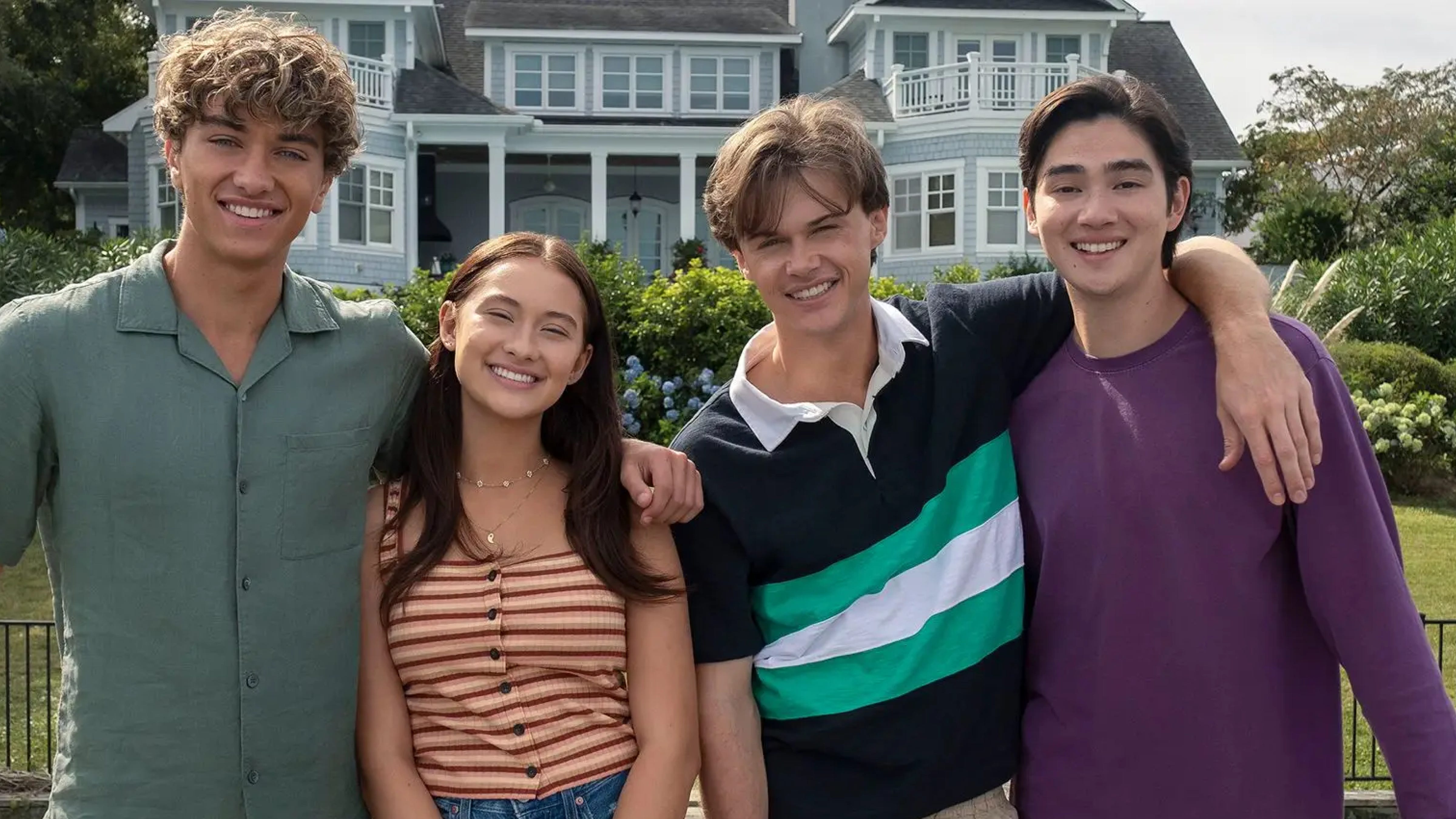
Growing up in early-2000s London, I saw white actors and Asian actors grace my TV screen long before I saw someone who looked like me. I only knew of one other half-Asian kid in my entire school and otherwise had one half-Asian family friend. That’s why years later, when I first saw Lola Tung in The Summer I Turned Pretty, I was ecstatic. A half-Asian lead openly desired by two handsome white boys. I couldn’t believe it. This was (shamefully) my childhood fantasy at a time when in my real life, I had white boys telling me they “just weren’t into Asians”.
Back then, being half-white meant nothing, as everyone chose to see me as one of the three Asians in my school year. Teachers would constantly mix up our names and people (myself included as a form of self-deprication) would casually make Asian jokes. I still remember spending nights in front of the mirror pinching my nose straighter, trying to elongate my round nostrils and stretching my eyes wider, imagining what life would be like if I had naturally blonde hair and blue eyes.
That’s why I was so puzzled when specifically Asian American started accusing me of being white-passing in my twenties, sometimes too white-passing to be speaking on Asian topics and experiences. While I now understand and acknowledge the concept and recognise the privilege it can entail, it still felt as though parts of my lived reality were being erased.
I was raised between London and Taipei in a three-generation Chinese household, fluent in Mandarin and deeply embedded in my culture. Yet it felt like I was suddenly being told that I was, in some sense, outside of it simply due to my perceived whiteness that clearly not everyone chooses to perceive.
Had I grown up in places like the Bay Area, Vancouver or Toronto, or within international school systems in Hong Kong or Taipei, my experience with a mixed identity would likely have been different. In those environments, I imagine that proximity to whiteness would operate as social capital in ways that would be able to reshape status, desirability and belonging. Sometimes I wonder what that would have done to me and whether I would have become someone entirely different.
But in my white London suburb, I definitely did not pass as white at all. Instead, I was the token Asian. So as a child and teenager, I too craved whiteness; to be accepted into white spaces; to be chosen; instead of constantly being asked “where are you really from?; instead of being questioned by British immigration police on suspicion of child trafficking upon returning to my home country, while my white friends who passed through without issue stared at me from the other side.
The other side of being mixed-race is being rejected by the other side of yourself, which for me, is my Chinese side. My parents did not send me to an international school in Taipei but instead put me in a local school. I was the only foreigner among two thousand pupils. At a time when all a child in their formative years wants is to assimilate, I could not.
That year, I was excluded. I had no friends and became the freakshow of the school. Kids from older grades would come to the classroom window and point at me during break times. On the train to and from school, adults would try and touch me and take unsolicited photographs of me. I became so stressed that I developed tics and started pulling my hair out in clumps, which resulted in my eventual return to the UK to continue my studies.
Things only changed when I returned to Taiwan at 19 years old for my gap year. Taiwan had changed. As a young adult, I had gone from being the school freakshow to being put on a pedestal by society for just being mixed-race, more specifically half-white. This was the first time I experienced male attention that I never had back in the UK. I was offered modelling contracts just because I was mixed. And it went to my head. In Asia, I was now special. I was wanted, and truthfully, I became a bit of a narcissistic bitch (which is why I’m glad I didn’t go to international school).
This was also the first time that I experienced and understood the meaning of white privilege and how I benefitted from it for just existing. It was unfair. But this is also when I started feeling the inexplicable feeling. When people started telling me of their dream to marry white to have “beautiful mixed-race babies”.
At 19, before the full development of my frontal lobe, I might have taken comments like these as a mere compliment. But the feeling that I couldn’t yet dissect still existed within me. Fetishisation? Objectification? I never really knew how to respond. Although the conditions had drastically improved since my school days, I realised I still didn’t really fit into the society that was my second home.
Returning home to attend university in the North of England (rightfully) humbled me. I went from being perceived as “special” back to being perceived as a foreigner in my own country.
I distinctly remember being asked six times on a night out about my ethnic origins, being complimented on my English ability and being called “oriental”. I was told to go back to my country by a white man in a nappy dressed as a baby in a chip shop. I was assaulted by a drunken man who whispered of his “love for orientals” as he grabbed me over the counter at the pub I worked at. To these people, I was not British and therefore not white. Rule Britannia, my wonderful home!
This is when I started finding comfort in online groups for mixed people. They served as a safe space to vent the complex intricaties of our collective serious and (very) unserious identity crises. We started meeting up in person. I’d never hung out with so many people like me in my life. It was special.
But as a Brit, I’d never heard the term “wasian” before. We instead called ourselves “halfies”. Being a halfie meant being mixed-race. There was no condition of having to be part white to exist within our halfie groups.
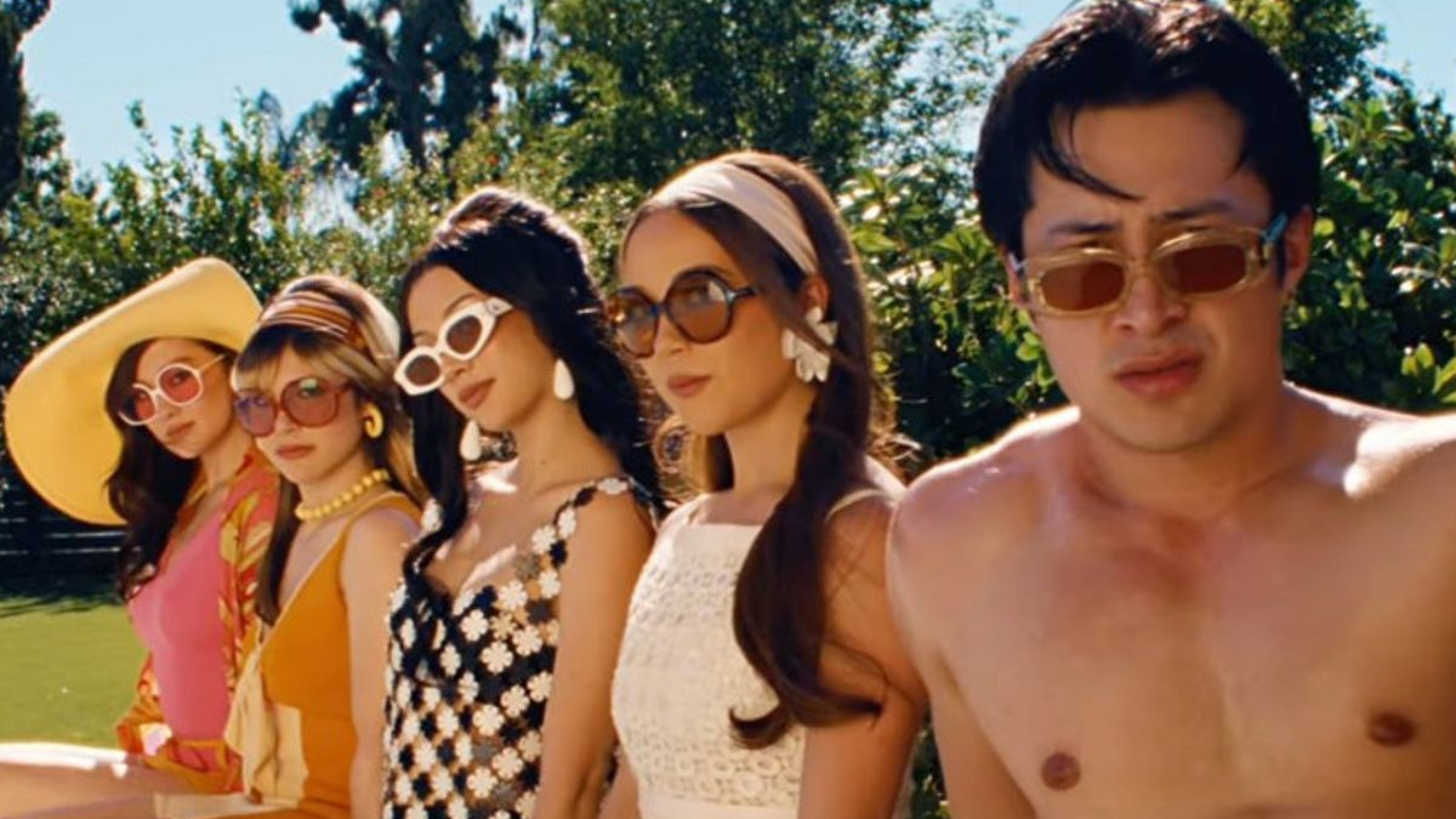
Today, we have reached peak “Wasia”, defined by the wasian Winter Olympics, wasian musicians and wasian actors. I’d never seen as many faces like mine dominating pop culture until now. That’s why I have to admit that I loved Laufey’s 'Madwoman’ music video. I imagine how she felt about this too having grown up in Iceland, where she said:
“Growing up, I felt a general lack of representation for people who looked like me in music and media. With the ‘Madwoman’ video, I wanted to be that representation.”
So I understand why wasians are so happy right now. There is this collective sense that our representation has finally “arrived”, particularly for those of us who did not grow up in places heavily populated by mixed-race Asians. Had I lived near one, I probably would have attended one of these wasian meetups myself, simply to experience the feeling of belonging to a visible and expanding community that I never had growing up.
And yet, seeing these meetups still left me with that same inexplicable feeling in my gut.
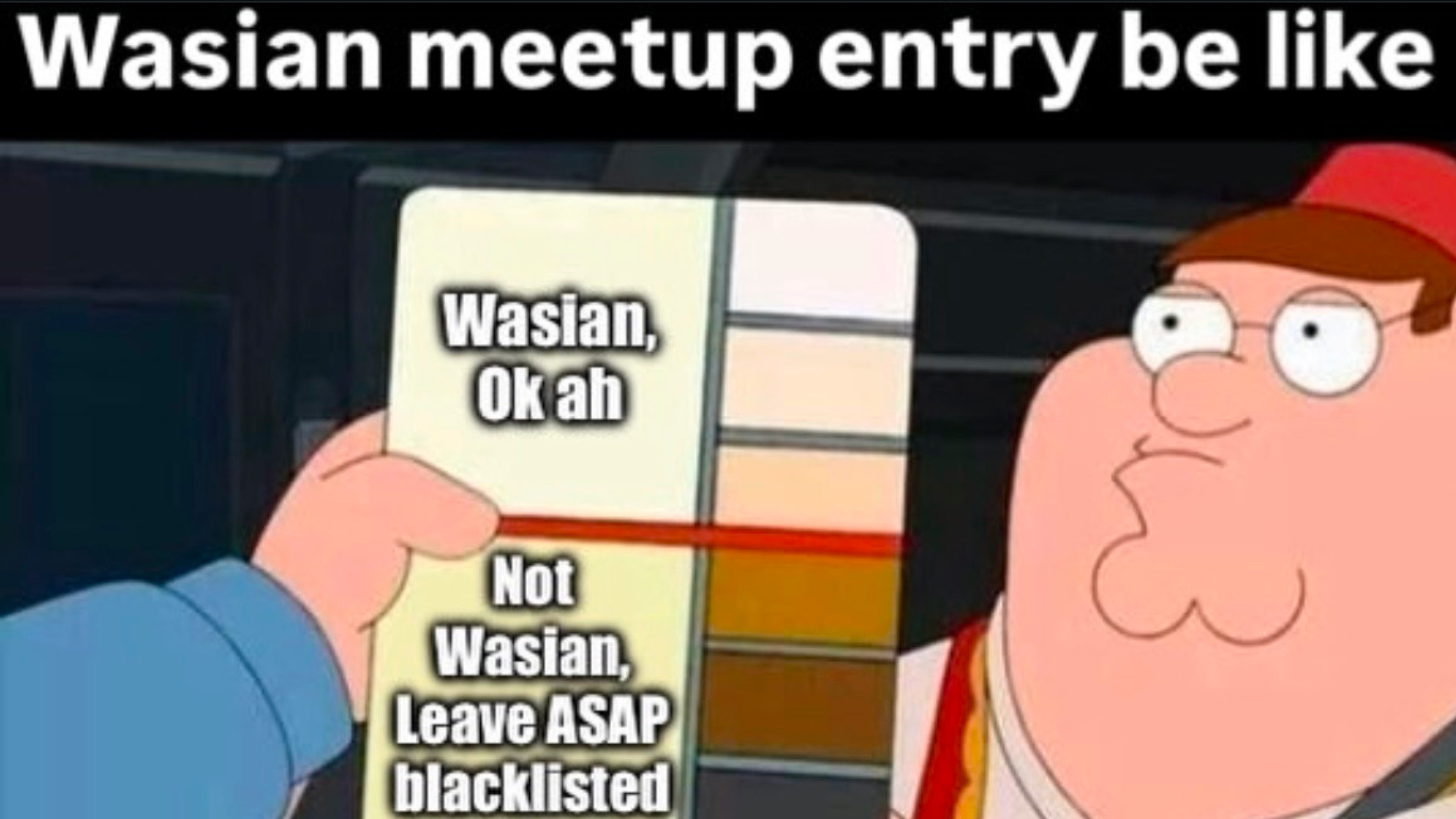
Part of it was probably my longstanding discomfort with the word “wasian” itself. But another part of me felt off about spaces like these being unconsciously framed around being half white and Asian rather than simply mixed-race.
Perhaps this difference has something to do with geography and demographics. Many of these meetups emerged in places with large wasian populations, where growing up around by people with similar background likely produced a different relationship to identity than the one I experienced in Britain, where mixed-race identity often felt broader, lonelier and less rigidly categorised.
So although I too was initially excited by the idea of celebrating an imagined “Kingdom of Wasia”, engaging with the conversations and criticism surrounding these spaces has made me reflect more critically on what they represent. But I also want to emphasise that I do not believe that the organisers of these events acted with malicious intent, but rather that they perhaps did not fully consider how easily the celebration of one specific mixed-race identity — particularly one tied to whiteness — can unintentionally reproduce older racial hierarchies in subtler forms.
For many people, these spaces simply offer visibility, recognition and belonging in ways they may never have experienced growing up, and that desire is completely understandable. So the issue is not with mixed-race people finding a sense of community with one another, but ensuring that this sense of community does not become unconsciously shaped by the same Eurocentric standards that continue to determine who is considered desirable, visible and worthy of celebration.
Belonging should be rooted in the shared experience of existing between categories and not measured by one’s proximity to whiteness.
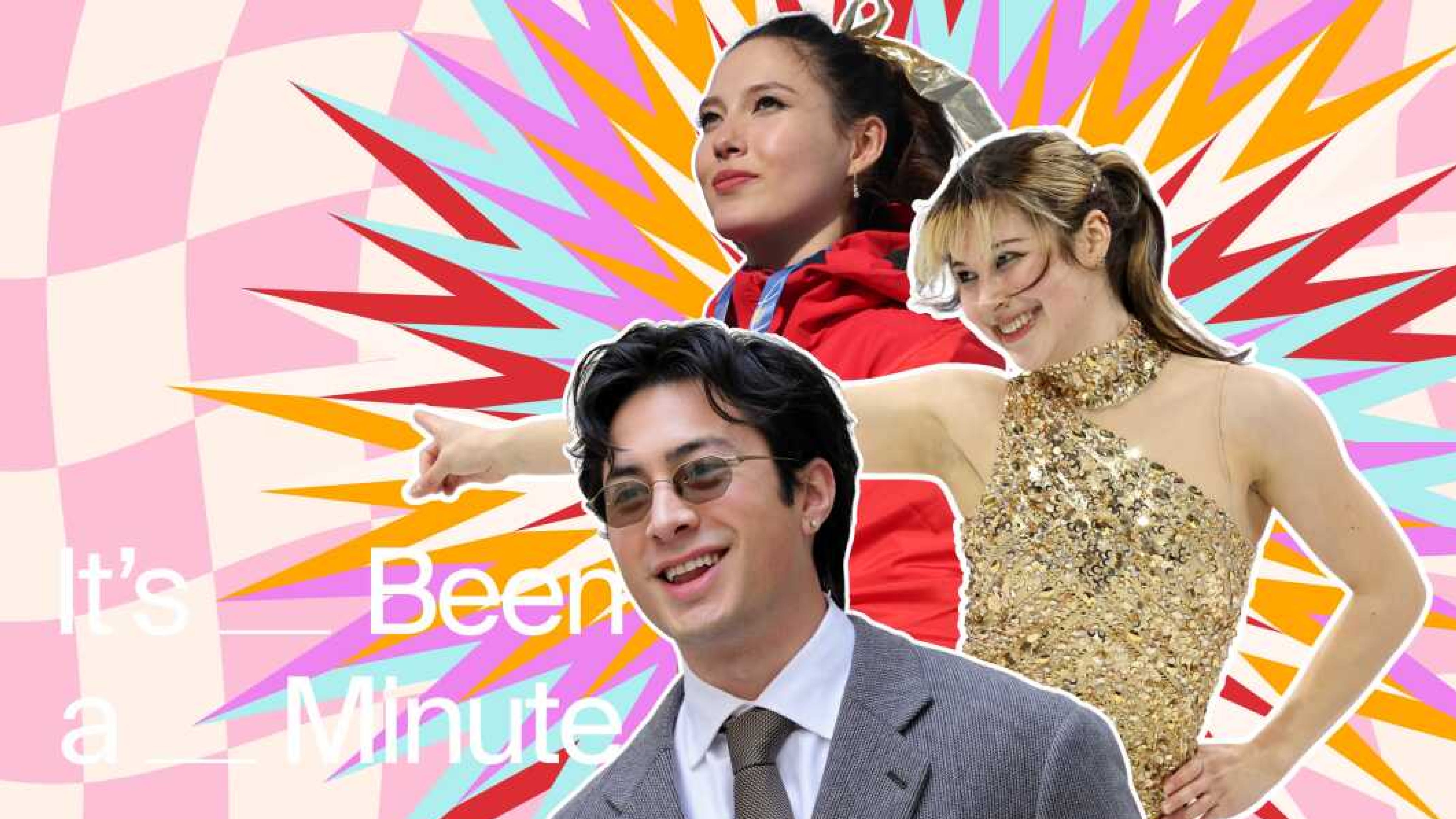
Although overt fears of race-mixing and anti-miscegenation laws have largerly disappeared, racial hierarchy has not. It has simply evolved into subtler forms, expressed through aesthetics, desirability, visibility and selective inclusion.
Wasians have now undeniably entered the Western and global mainstream, but representation cannot stop with those who are perceived as closest to whiteness. Hollywood and global media industries continue to favour ethnic minorities who are racially ambiguous or more aligned with Eurocentric beauty standards, and this has shaped which mixed-race people are considered marketable, relatable or desirable.
If mixed-race visibility becomes dominated by solely half-white identities, there comes a risk that industries simply use them to fill “diverse” roles while continuing to marginalise darker-skinned minorities and other mixed-race groups.
At the same time, it still pains me to see “wasian” identity reduced to an empty phenotype, an aesthetic category, or evidence of eugenic thinking. Even if some people consciously pursue wasian children out of desires tied to genetics, beauty or proximity to whiteness, criticism should be directed toward those ideologies and structures rather than toward the child who is forced to exist under the weight of those projections. To grow up knowing that strangers interpret your existence politically, aesthetically or genetically before they see you as a person is deeply disorienting.
It’s also difficult to sit with how often mixed-race identity becomes something projected onto, analysed or explained, rather than simply listened to.
The mixed-race experience cannot be flattened into a single narrative or moral framework, which is what we as humans seem so conditioned to try and do. So rather than reducing wasians to symbols of colonialism, desirability or social engineering, we should be interrogating the racial hierarchies and Eurocentric structures that continue to shape how people understand race, beauty and belonging in the first place.
Many of us are simply trying to navigate systems and identities that were never designed to accommodate our existence.
Mixed-race people were never meant to exist comfortably within a world structured by white supremacy. Mixed-race people disrupted and threatened the logic of racial purity by proving that these supposedly fixed boundaries were never stable to begin with. We were once feared for our proximity to whiteness and are now selectively praised for similar reasons. It’s confusing to inherit an identity that was historically condemned, only to later see it aestheticised under many of the same Eurocentric standards that once rejected it.
But here we are, growing in numbers across an increasingly interconnected world. To me, that represents something hopeful. Our existence as mixed-race people reflects the reality of a multicultural and globalised future that can no longer be neatly contained within the rigid racial categories created by colonialism and white supremacy. Isn’t that great! Yay!
Sincerely,
a slightly narcissistic, simultaneously self-depricating, existential and exhausted wasian mixed-race person trying to exist in a world that was never designed to accommodate us :-)
Sources:
Japan Reborn: Mixed-Race Children, Eugenic Nationalism, and the Politics of Sex after World War II: Kristin A. Roebuck, Columbia University (2015)
The “Yellow Peril” Mystique: Origins and Vicissitudes of a Racist Discourse: Stanford M. Lyman, International Journal of Politics, Culture, and Society (2000)
“Unlawful Intimacy”: Mixed-Race Families, Miscegenation Law, and the Legal Culture of Progressive Era Mississippi: Kathryn Schumaker, Cambridge University Press (2023)
Welcome to ‘The Republic of Wasia’: Brittany Luse, Mika Ellison, Liam McBain, Neena Pathak (2026)
‘Wasian’ Is Growing In Popularity — Experts Share If It’s A Good Thing: Monica Torres, HuffPost (2026)
Further Reading:
‘Abolish Wasia’ - Briana L. Ureña-Ravelo
‘have we reached peak Wasian internet?’ - Iris (Yi Youn) Kim
‘In Defense of Wasians’ - Kai Cruz
Mixed/Other: Natalie Morris (2021)
‘Start Wasian Hate?’ - aki lee camarg
‘Thoughts on the Wasian Invasion’ - Miya Libman
I can’t believe how many of us mixed-Asians are experiencing the same feelings right now. I just wrote about this, too, as a way to process the complicated feelings I have with this “Wasian moment”, and the algorithm brought me here. It’s like we are moving through the moment in lock-step, but from thousands of miles away.
There’s so much we have in common and the one emotion I feel that underlies the experience is a combination of guilt/shame/cringe. We can’t control how we are born or perceived so when others objectify us we know why it’s wrong, but it feels impossible to push back in the moment on our own.
But the thing is this Wasian wave for better or worse could actually start to build a culture beyond phenotype. If we want it to. Like you, I didn’t asked for this moment to arrive this way but it did. So the question is to do we let it carry us wherever it goes, or do we try to direct it into something better than what it has been: a cultural obsession about appearance and breeding.
Thank you for writing this. You said all the things and more that I've been feeling about the Wasian discourse. It feels so weird to be discussed like this when for me I've really only just settled into being comfortable in my mixed race identity. The part you said about growing up and feeling that being half white is truly inconsequential because people will be racist to your Asian half anyway was too real - I was exactly the same. It's been an incredibly confusing and jarring time! And strange to see in real time 'Wasians' trending, that trend getting backlash, now rejection again, when most of us are out here just trying to live!!